VibesNearby.net
Artists, venues, events, local music discovery and creator visibility.
Explore discovery →Virtual Stage Network exists because Connecticut artists deserved better than what every other platform was offering them.
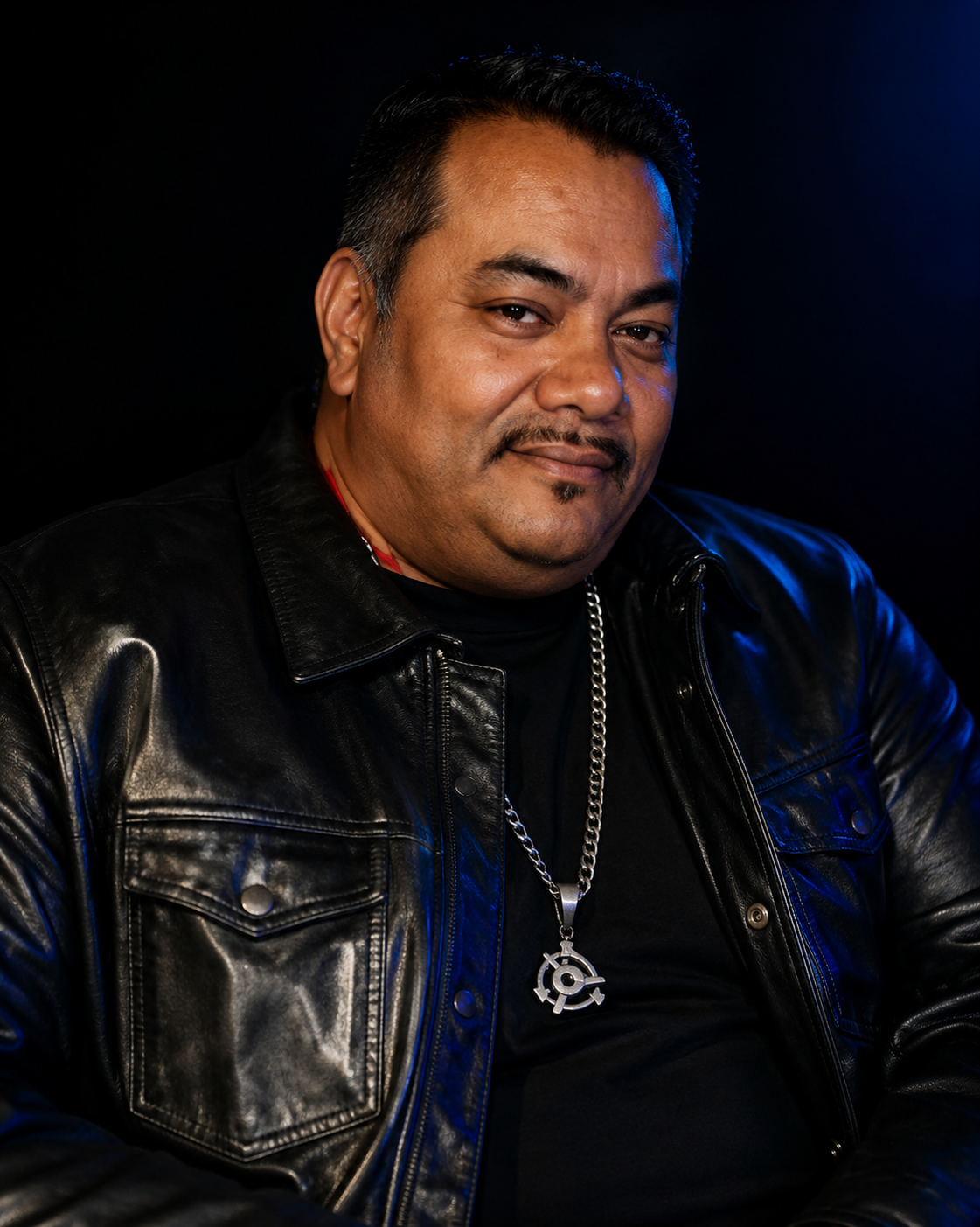
Founder & Systems Architect
New Haven County, Connecticut — World Media Group
"I grew up in New York City. Block parties. Parks. DJs who saved up their own money, bought their own equipment, and performed for a neighborhood that loved them — for free. That image never left me. And everything I've built since comes from trying to answer one question: why does it still work that way?"
Alan Bush grew up in New York City, surrounded by a music culture that ran on passion and almost nothing else. The block parties, the park performances, the local DJs who pooled their money to buy speakers and turntables because nobody was going to buy them for you — that was the scene. And the talent was real. The crowds were real. The only thing missing was any mechanism for the people creating the experience to actually earn from it.
In the late 1980s, Alan attended John Jay College of Criminal Justice in New York. He joined the music club, discovered the college radio station, and started going to live performances of groups connected to the scene. He was watching something he'd always loved from a new angle — and the same pattern was impossible to miss. Artists pressing records. Artists doing shows. Artists building real followings. And every single one of them still had a day job, because the music alone couldn't cover the bills. Some of those same artists are still performing today — and still have a day job.
He didn't fully understand the business yet. But he was taking notes.
The Blueprint — Early 2000s
After moving to Connecticut, Alan came across an ad that most people would have dismissed immediately: "Radio broadcasters wanted. No experience necessary."
It sounded like a pitch. It sounded like something you'd scroll past. Alan went to the introductory meeting anyway — and sat across from Gary Lajoie of Cameo Broadcasting Systems, who explained the model: you pay for your radio slot, you learn by doing, you build your show from the ground up. Somewhere between $30 and $60 a week.
Most people would have walked out. Alan saw it differently. Broadcasting school would have cost thousands. This was hands-on, real-world radio experience — for the price of a dinner out. He signed up. And for the next three to four years, he hosted Feel The Power on CyberstationUSA.com, learning the craft and the business from the inside.
Gary Lajoie taught him something that shaped everything that came after: relationships and community always come before technology. The platform is the means. The person creating is the point. You build the infrastructure around the artist — not the other way around.
That lesson — learned in a cheap radio slot that most people would have called a scam — became the foundation of every platform Alan has built since.
Three Things Collided
During his time in New York, Alan met the woman who would become his wife — Ingrid. She was a singer — and by his account, probably the best one in her group. She lived to sing. She travelled with the group to venues across New York, down to Maryland and South Carolina, and through Connecticut. She loved every minute of it.
Ingrid also bought her own outfits. Out of her own pocket. Because the money from performing wasn't going to cover it — the pay was small, the group had a manager, and by the time everyone took their share, the artists were left with very little. The venues were in New York, where most of the music was happening. But even in the best rooms, on the best nights, the economics didn't work for the people on stage.
They married and moved to Connecticut, where Ingrid's voice kept drawing people in — even as the business side of music kept letting her down. Over the years, Alan kept meeting musicians and singers — all with the same story. Talented. Working. Performing regularly. And every single one of them still had a day job, because the music subsidized itself as a hobby rather than functioning as a career. Not because they weren't good enough. Because the infrastructure wasn't there.
Ingrid kept singing because she loved it. She still does. But what could have been a career became a passion project — and Alan never stopped thinking about why that kept happening, to her and to everyone around them.
The idea for VSN didn't arrive as a single flash. It arrived as three separate problems that all became impossible to ignore at the same time.
📻 Radio roots showed artists had no real home online
The internet radio era proved that the technology to reach an audience existed. What didn't exist was a platform that treated the creator as the business, not the product. Social platforms came along and filled the exposure gap — then took the monetization for themselves.
🏛 COVID collapsed live venues and nobody rebuilt the ecosystem
When in-person venues went dark, Connecticut's live music scene didn't just pause — it shattered. Some venues never came back. The artists who depended on them were left with nothing but platforms designed for passive content, not live performance. Nobody came to rebuild the infrastructure for local scenes.
🎤 Big platforms ignored local artists while taking their cut
The booking platforms that did exist were built for scale, not for the working musician trying to get a gig in New Haven on a Friday night. Thirty to forty percent off the top, algorithmic discovery that buried anyone without a following, and zero accountability when nothing came of it. The tools existed. The fairness didn't.
Radio roots, venue collapse, platform neglect. All three landed at once. And Alan had enough context from two decades in independent broadcasting to know that if he didn't build it, nobody else was going to.
Building the Ecosystem
Alan didn't start with Virtual Stage Network. He started with VibesNearby — a platform built to be the operating system for Connecticut's local music scene — connecting fans, artists, DJs, venues, broadcasters, and promoters — then an internet radio platform, then a full live event and monetization layer with tips, ticketing, streaming, and bookings. Three platforms built one at a time, each one teaching him something the previous one couldn't.
The lesson that made VSN inevitable: a directory and a radio station weren't enough. Artists needed to earn. Not just be found. Not just have a profile. Not just exist in a database. They needed a stage they could perform on from anywhere, a direct line to the fans who wanted to support them, and a booking channel that didn't take half of what they made.
Virtual Stage Network is the live performance layer that completes the ecosystem. The platform the VibesNearby community had been building toward without knowing it had a name yet.
The Belief
New Haven has always had talent. Hartford has always had talent. Every city in Connecticut has always had musicians, DJs, comedians, podcasters, and performers who are good enough — who've always been good enough. What they've never had is infrastructure built specifically for them, at a price that doesn't assume they're already famous.
The major platforms were built for scale. For virality. For the 0.1% of creators who break through and make the algorithm look good. Everyone else gets the scraps — the exposure that doesn't pay rent, the tips that get taxed at 30%, the bookings that go to whoever has the most reviews.
VSN was built for the other 99.9%. For the working artist who plays Friday nights and deserves to keep 92 cents of every dollar a fan sends them. For the performer who can reach an audience without leaving Connecticut — without a label, without a manager, without a following on some other platform first.
"Ingrid had the voice. She had the dedication. The system just wasn't built for her. I built VSN so that story doesn't keep repeating itself — so the next artist who fills a room on a Friday night actually walks away with something to show for it."
Success for me is the first time an artist pays a bill from tip money they earned here. That's when I'll know we got it right.
Alan Bush
Founder, Virtual Stage Network & World Media Group
What We're Building Toward
That they are not alone. That someone — who watched Ingrid buy her own performance outfits because the pay didn't cover them — built this specifically for them — not for advertisers, not for investors, not for the 1% of artists who already have a following. For the independent performer who has been doing this for years, loving it, and not getting paid what they deserve.
That what happened to Ingrid — what happened to thousands of talented people across Connecticut who filed their gift away as a hobby because the money never worked — doesn't have to keep happening.
You can earn a real living from your craft without leaving Connecticut. Without a manager who doesn't pay right. Without a venue that keeps the door. Without a platform that takes 30 or 40 percent and still doesn't make you findable.
Right now. From your phone. From a bar stage or a brewery corner or your living room on a Tuesday night. The fans who want to support you have a way to do it. And this time, the money gets to you.
Part of the
VSN is one of four platforms built to serve Connecticut creators. Each one was built because the previous one revealed something that was still missing.
VibesNearby Radio
Internet radio + DJ airtime marketplace
VibesNearby Artists
The OS for Connecticut's music scene
VibesNearby Live
Tips, bookings & memberships
Virtual Stage Network ← here
Live streaming performances
Join the network. Stream from your phone. Start earning from tips and bookings today.
New Haven, Connecticut — World Media Group
Four connected creator platforms, each serving a different stage of the independent creator journey.
Artists, venues, events, local music discovery and creator visibility.
Explore discovery →Digital radio, DJs, shows, music features and editorial media.
Listen + read →Tips, requests, bookings, tickets and direct artist-fan interaction.
Connect live →Broadcast, perform, build an audience, receive support and get booked.
Perform here →